CPCTN Training Program
The Canadian Primary Care Trials Network (CPCTN) is launching a new, hands-on training program designed to support clinicians and early-career researchers in building the skills and confidence needed to engage in primary care clinical trials.
Clinical trials are essential to evaluating new interventions, improving models of care, and generating the evidence that informs everyday practice. Yet many clinicians and emerging researchers face barriers to getting started. This program is designed to bridge that gap—providing practical, accessible training grounded in real-world primary care research.
From Idea to Proposal
This structured program will guide participants through the core elements of clinical trials, with a focus on randomized controlled trials (RCTs) in primary care settings. Through a combination of curated learning modules, interactive sessions, and one-on-one mentorship, participants will be supported in developing their own research idea into a brief study proposal.
What Participants Will Gain
Participants will:
Build foundational knowledge in clinical trial design and conduct
Learn the key components of randomized controlled trials
Refine a research question or project idea
Develop a concise study proposal
Receive individualized mentorship from experienced trialists
Gain confidence to participate in or lead primary care research
Program Structure
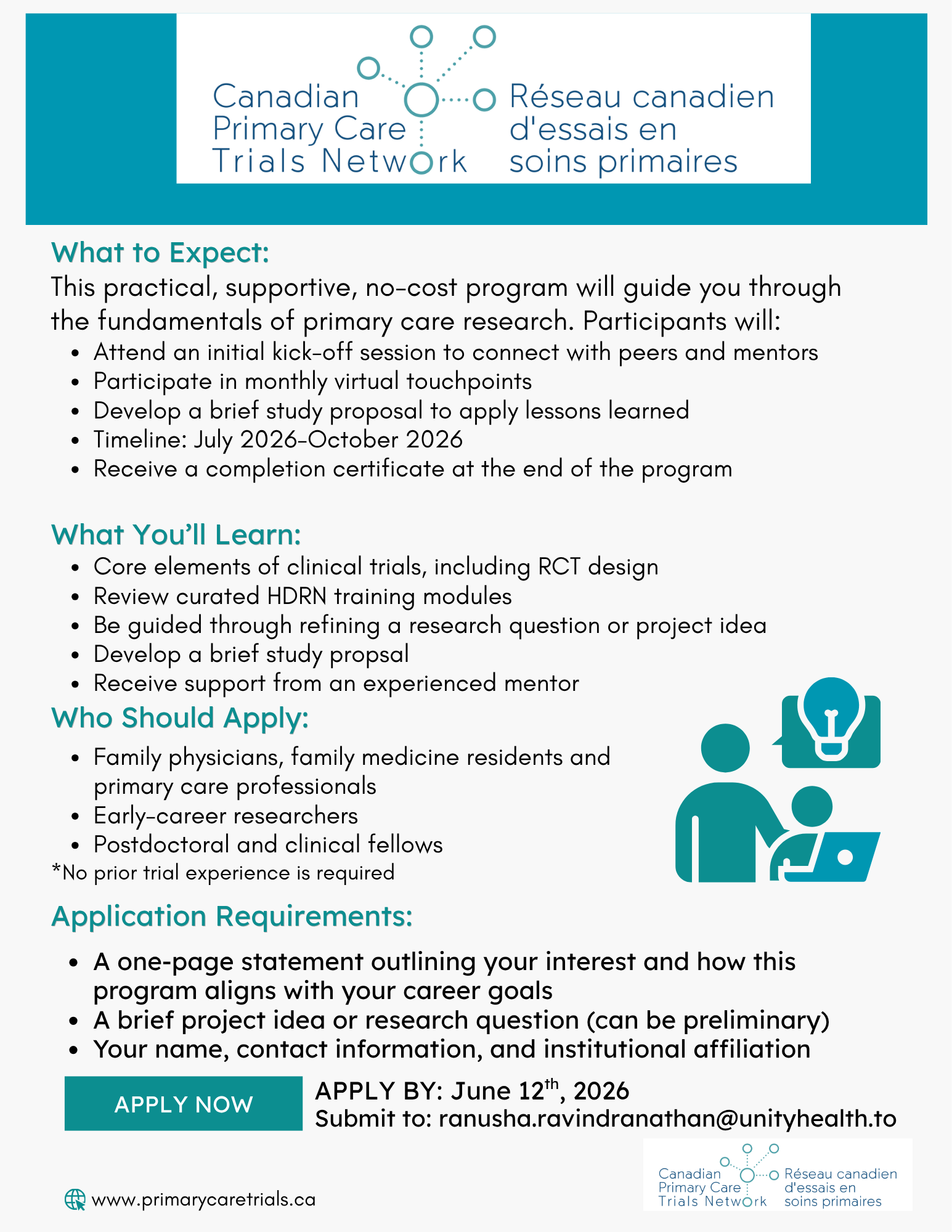
This is a practical, supportive, and no-cost program delivered over four months:
Timeline: July to October 2026
Format: Virtual with a mix of live sessions and self-directed learning
Components:
Kick-off session to connect with peers and mentors
Monthly virtual touchpoints
Guided independent learning and proposal development
Who Should Apply
We welcome applications from:
Family physicians and primary care professionals
Early-career researchers
Postdoctoral fellows and clinical trainees
No prior clinical trial experience is required.