Mentors
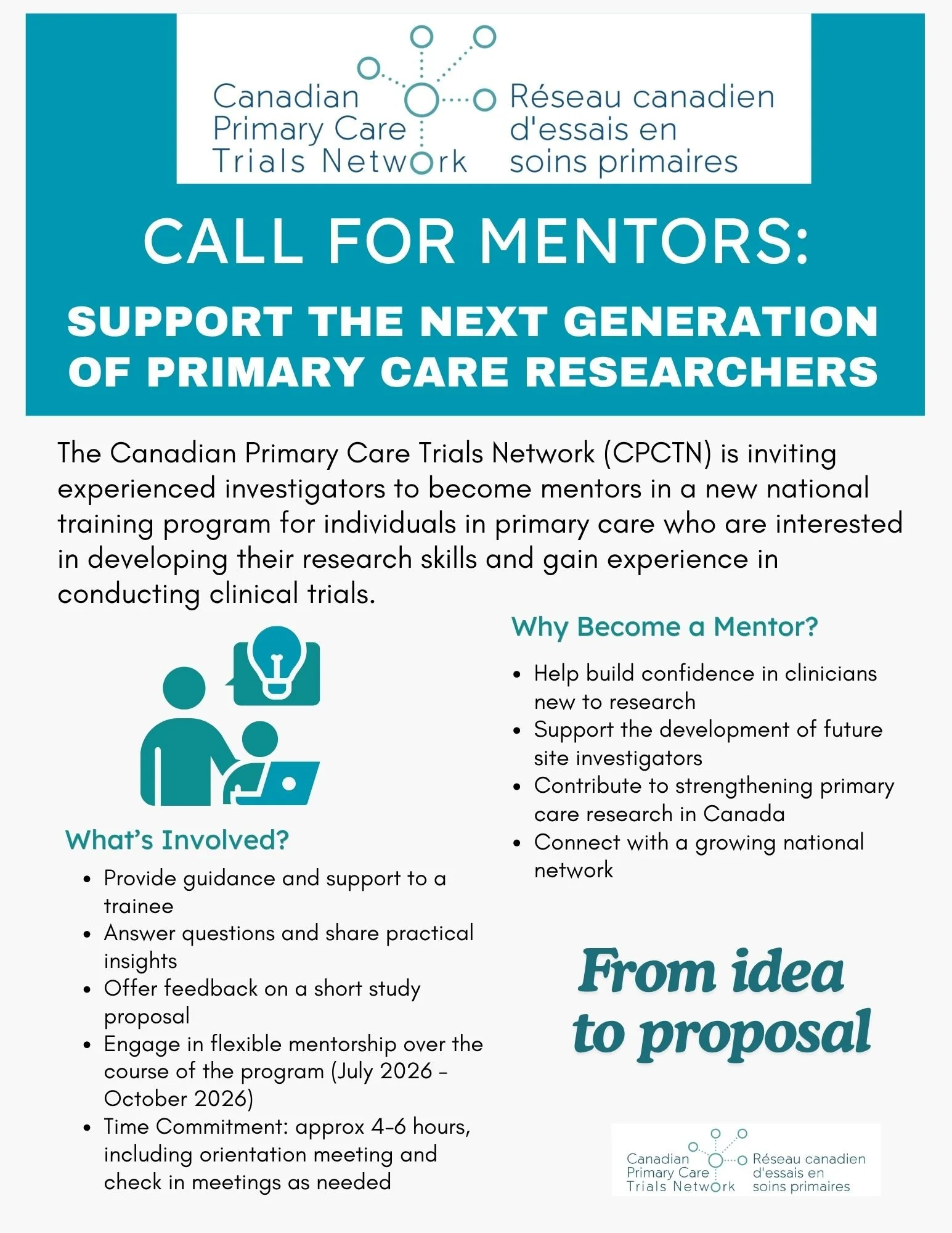
The Canadian Primary Care Trials Network (CPCTN) invites experienced researchers and clinicians to serve as mentors in our Primary Care Research Training Program. This initiative is designed to build capacity in primary care trials by supporting the next generation of site investigators.
Mentors are central to the success of this program—providing practical guidance, sharing real-world experience, and helping trainees translate ideas into actionable research proposals.
Why Become a Mentor?
By joining as a mentor, you will:
Help build confidence in clinicians and researchers who are new to clinical trials
Support the development of future site investigators in primary care
Contribute to strengthening primary care research capacity in Canada
Connect with a growing national network of researchers and collaborators
What the Role Involves
Mentorship in this program is flexible, practical, and designed to fit within busy schedules.
As a mentor, you will:
Provide guidance and support to a trainee over the course of the program
Answer questions and share practical insights from your experience
Offer feedback on a short study proposal
Engage in mentorship from July to October 2026, with check-ins as needed
Estimated time commitment: approximately 4–6 hours total, including a brief orientation and periodic meetings.
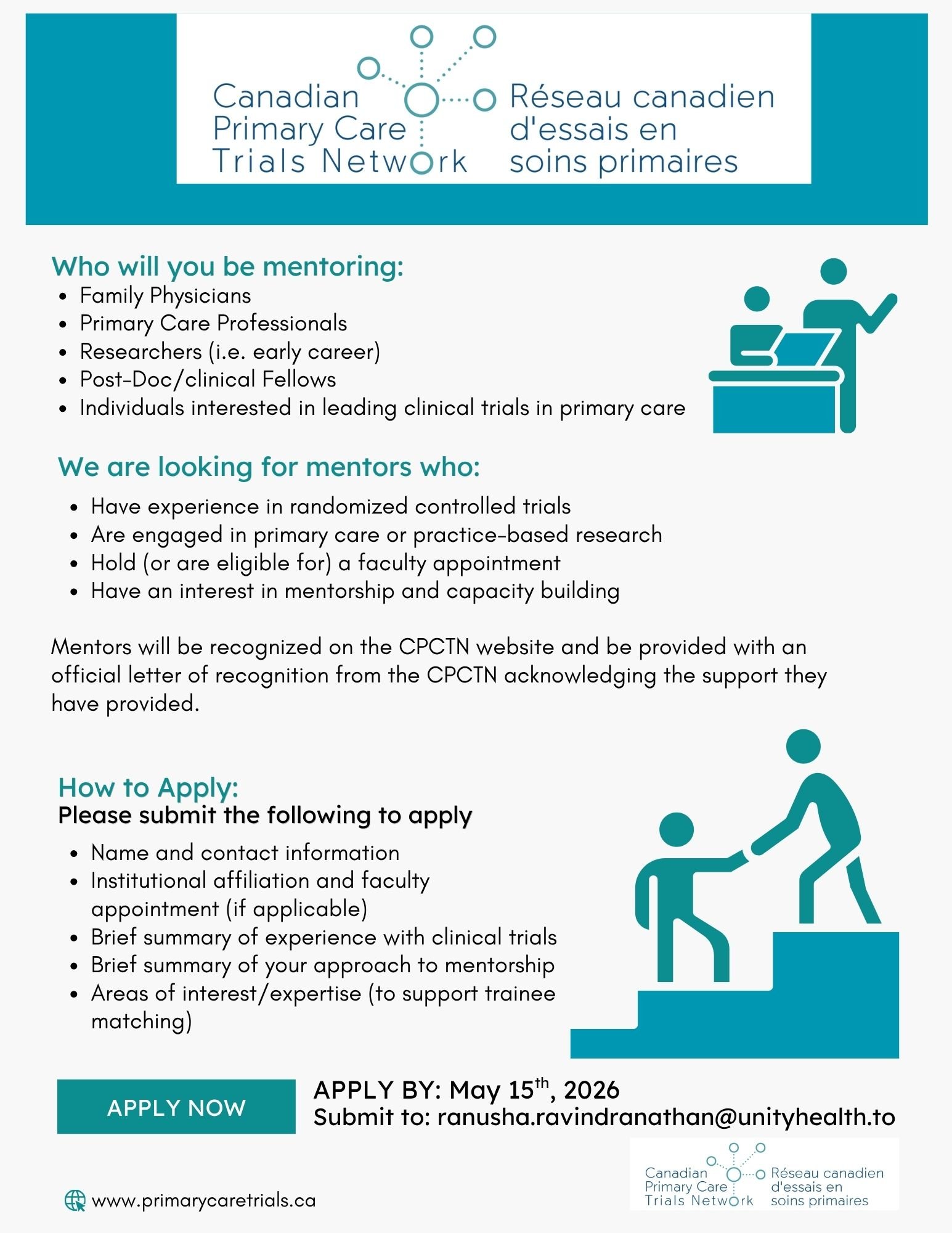
Who Should Apply
We are looking for mentors who:
Have experience in randomized controlled trials
Are actively engaged in primary care or practice-based research
Hold (or are eligible for) a faculty appointment
Have an interest in mentorship and research capacity building
Recognition
We value the time and expertise mentors contribute. In recognition of your role, you will receive:
A formal letter of recognition from CPCTN
Acknowledgment on the CPCTN website
Make an Impact
Mentoring is an opportunity to shape the future of primary care research in Canada. By supporting emerging investigators, you help strengthen the evidence base that informs clinical practice and improves patient care.